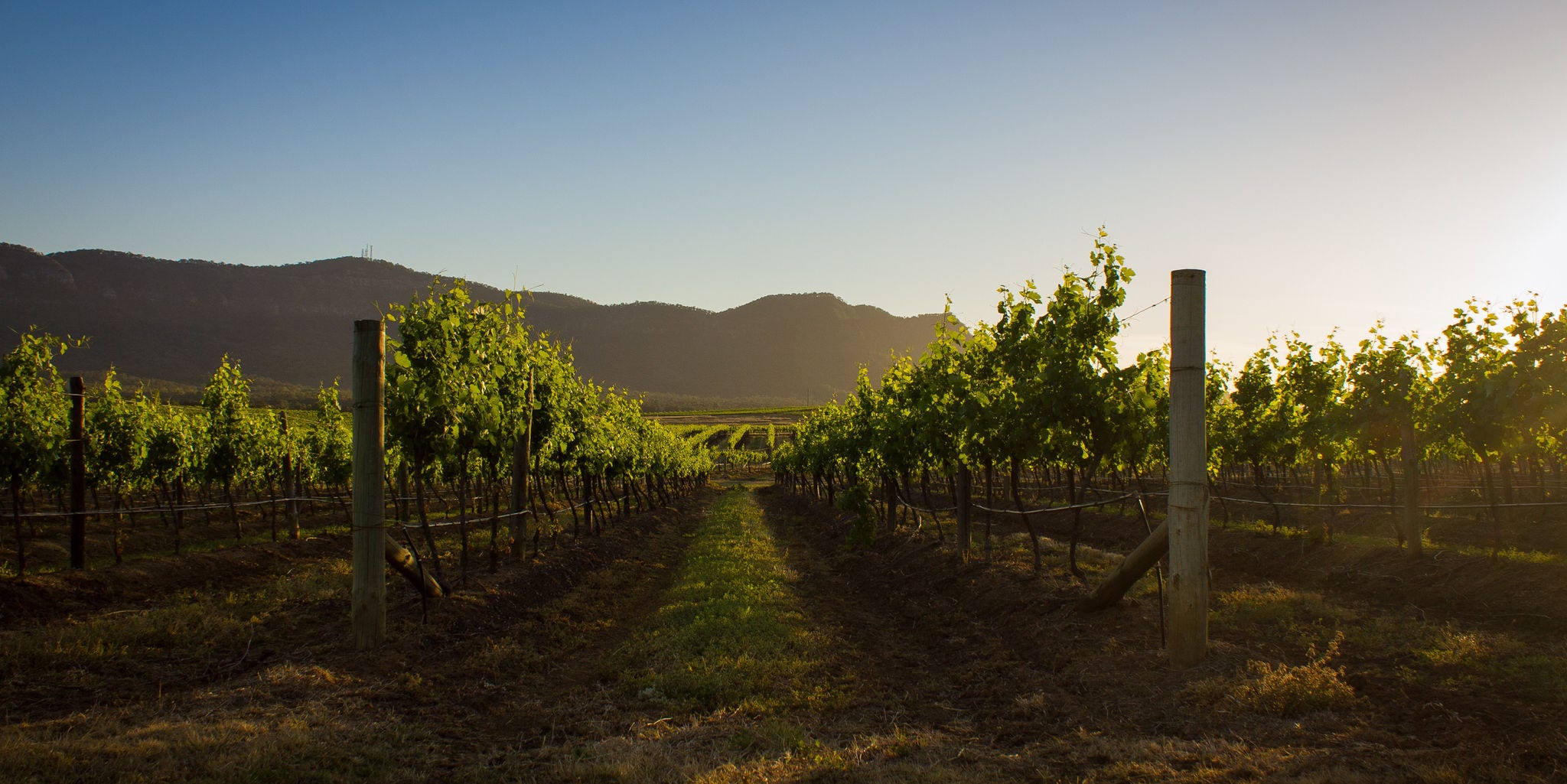
Australia, a land of contrast and diversity of snowy mountains and tropical beaches. A new world wine country but home to ancient soils and some of the oldest vines on the planet.
The first wine grape vines arrived in Australia with the first fleet in 1788
Today more than 100 grape varieties grow across 65 distinct wine regions.
Although Australia is home to world famous wine brands that have found huge commercial success. This is just one part of its remarkable wine story.
Australia is the worlds sixth largest country, far larger than Europe, and it is this huge size that explains the diversity of wines produced here. It is truly a continent of wine. And yet it is home just to 4% of global vineyard plantings. That is about the same amount as the French wine regions of Bordeaux and Burgundy combined.
Australia’s latitude, maritime influences and elevation all contribute to a huge variety of climates. In the southern regions where vineyards are concentrated, the cold and stormy southern ocean jeeps temperatures cool and contributes to an idea climate for producing wine. This is at it’s most extreme in Tasmania. Bathed in cooling ocean currents, Tasmania has a truly cold climate, perfect for the production of high quality traditional method sparkling wine that it is celebrated for.
Moving inland, away from these cool ocean breezes, regions become much more continental in climate with hold summers and cold winters. Rutherglen, situated inland in Victoria has a classic continental climate with a long, dry autumn, perfect for producing the unique styles of fortified wines this region is best known for.
Other regions have a more Mediterranean climate with warm, dry summers and long growing seasons. In many of these regions, red varieties like Shiraz and Grenache dominate, perfectly suited to this type of climate.
Margaret River in Western Australia also enjoys a balmy Mediterranean climate but here this is tempered by a strong maritime influence. This, alongside the region’s ancient, gravelly soils make it a natural home for world-class Cabernet Sauvignon Blanc and Chardonnay.
Shiraz is Australia’s most planted grape variety and Australia has the greatest diversity of styles of Shiraz in the world. Classic warm regions like Barossa Valley and McLaren Vale give full-bodied, richly textured wines with layers of black fruit, oak and spice characters.
In contrast, in high-altitude regions like Canberra district, sunny days are tempered by cold nights, given medium bodied styles with peppery spice and floral notes.
But there is far more to Australia than simply Shiraz and alternative varieties like Fiano, Vermentino, Tempranillo and Teriga Nationale and growing in popularity.
While plantings of varieties like these are still small, production in increasing due to how well suited they are to Australia’s lifestyle, food and climate.
Australia’s wine regions are geologically ancient and the country boasts some of the oldest grape vines in the world. In fact, some vineyards are more than 150 years old and a still producing fine wines to this day.
The Barossa is home to Australia’s largest collection of old vines. The oldest Shiraz vines in the world, planted in 1843, still flourish here. Along with the oldest Grenache and more vines.
Australia’s unique landscape and climate have fostered a fiercely independent wine scene, home to a vibrant community of growers, wine makers and viticulturalists. We’re not beholden by tradition but continue to push the boundaries in the pursuit of the most diverse, thrilling wines in the world.
That’s just our way.