Australia is a natural base for ambitious tech companies to expand into the Asia-Pacific region. In early 2025, Germany’s LiveEO became the latest space-tech startup to land in Australia with regional ambitions.
According to Jan Stenzel, LiveEO’s Director of Infrastructure for EMEA & APAC, the company’s image-analysis tools will help Australia meet some of the big challenges of today. These include bushfires, power grid expansion, and mine site surveillance.
‘We mostly work with critical infrastructure, and Australia has lots of it in remote areas that are hard to access,’ says Stenzel. ‘This is a strategic investment. For us, Australia is a launchpad into the wider Asia-Pacific region.’
Space images and automated analysis
LiveEO was founded in Germany in 2018. Half of its 130-strong workforce are engineers. With headquarters in Berlin, the company has offices in Munich, Latvia, the UK, and the US.
The company specialises in capturing, analysing and interpreting satellite imagery. This includes creating 3-D models. LiveEO can monitor forests and farms to check for deforestation. The company can also monitor remote assets.
‘Our technology conducts surveillance on critical infrastructure such as powerlines, pipelines and railways – as well as farmland and habitats,’ says Stenzel. ‘We can help mitigate the risk of man-made events and natural disasters.’
‘What makes us unique is our ability to automate analysis of vast areas,’ he adds. ‘We have a suit of intuitive applications to make sense of imagery, so our technology generates useful insights.’
Australia’s unique geography
Like other investors, LiveEO was attracted to Australia’s business culture.
‘Australia is similar to the US and the UK,’ says Stenzel. ‘Businesses are very pragmatic. There is a willingness to adopt new technologies.’
Stenzel also points to fast-growing opportunities for advanced technologies – especially given Australia’s unique geography.
‘The energy transition means Australia needs more power-transmission infrastructure,’ he says. ‘Australia needs additional tools to help protect the grid and ensure uptime.’
Large-scale, automated image analysis can also help manage the natural environment.
‘Wildfires are a big problem in Australia, and our technology helps mitigate risks,’ says Stenzel. ‘With our insights, officials can be more diligent in how they manage vegetation in remote areas. For example, they can reduce the risks of trees falling onto powerlines.’
A permanent base in Australia
Australia was an early focus for LiveEO as it grew beyond Europe.
‘One of our first major customers was in Australia, so it was clear that Australia would be a focus for us,’ says Patrick Hollenbeck, Director of Marketing, LiveEO.
‘In mid-2024 we decided to start growing our business organically in Australia. This would ensure we got the market right.’
LiveEO now employs 2 people in Sydney: an engineer and a commercial lead.
‘This is the start of our regional office,’ adds Hollenbeck.
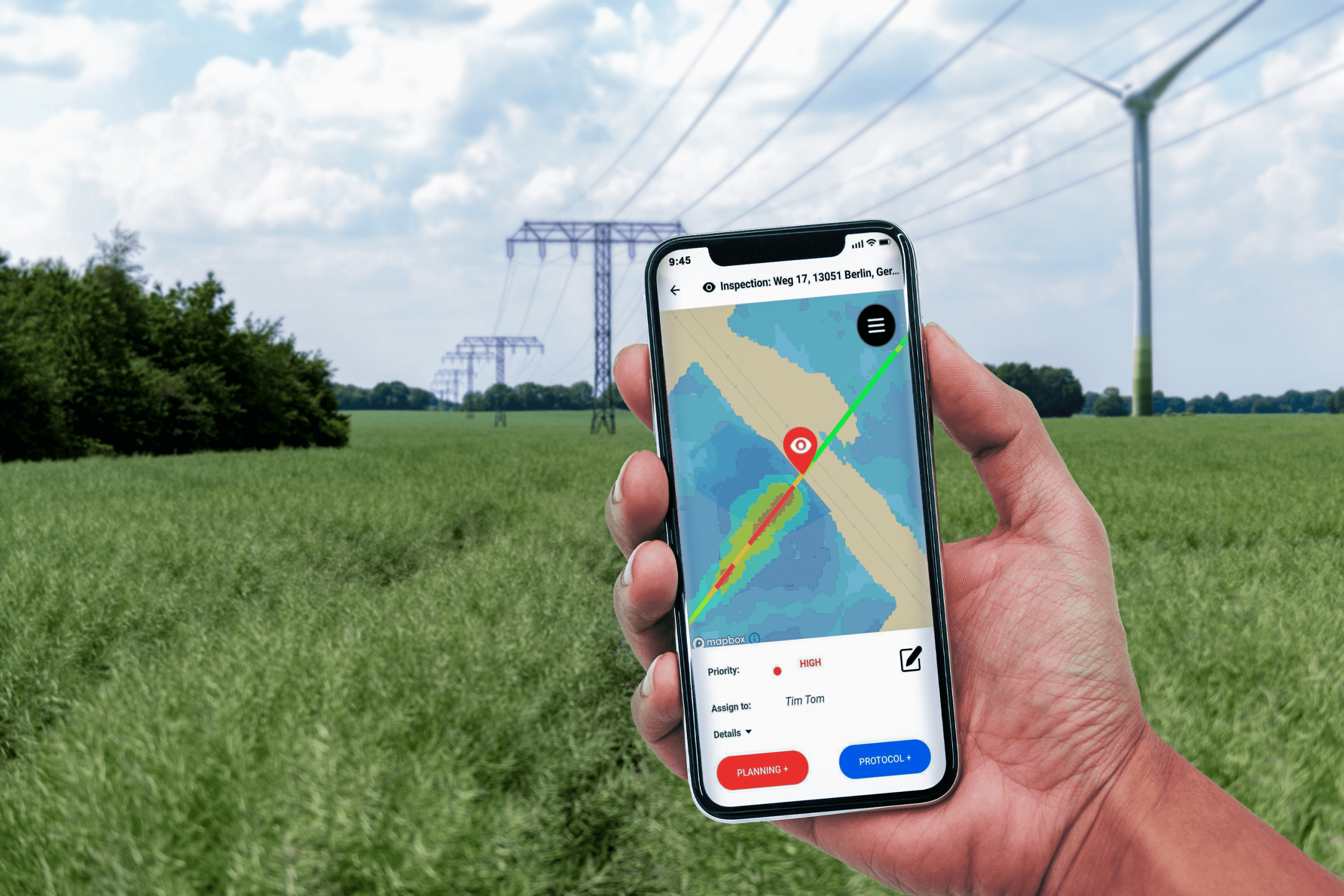
LiveEO’s satellite imagery technology can help monitor power lines, protecting the grid and ensuring uptime.
Expansion into Asia-Pacific
Sydney is a first step in an Asian strategy. LiveEO says that language and time zone factors make Australia an ideal base for a European tech company to expand into Asia.
‘Our plan is that this investment becomes part of a regional growth plan,’ says Hollenbeck.
‘We are a data-driven company and Australia has a tech-savvy culture,’ he adds. ‘A presence in Sydney makes it easier to expand into Indonesia and Asia.’
Building up domestic sovereignty
Earth Observation (EO) data plays an important role in Australia’s economy, shares Eva Pannhausen, Austrade’s Investment Manager in Frankfurt.
‘EO contributes approximately A$3.2 billion to Australia’s GDP (2024), with the government spending A$100 million annually for this data,’ she says.
Federal programs like Rewiring the Nation – and investment in upgrading and expanding Australia’s electricity grid – will further increase the demand for monitoring critical infrastructure.
‘Australia currently relies heavily on foreign EO data providers,’ says Pannhausen. ‘This poses risks to economic security if access to data is disrupted.
‘Currently, there are efforts to develop sovereign EO capabilities and leverage Australia's strengths in data quality verification and management. This will create opportunities for investors looking to establish long-term domestic expertise and capacity.’
How Austrade helped
Austrade helped LiveEO in 3 ways: market insights, official contacts and practical advice.
‘We had very friendly exchanges with Austrade advisers in Germany before we went to Australia to research opportunities,’ says Stenzel. ‘The market intelligence helped us understand potential use-cases for our technology.
‘Austrade also shared information on industry initiatives, such as planned infrastructure projects.’
Pannhausen worked closely with Russell Canning, Investment Manager at Investment NSW, to brief LiveEO executives before their trips.
‘We shared key events with them, so they could grow their network in Australia and help build a business case,’ she says. ‘As LiveEO grows it will be eligible for increased support and incentives.’
IAC 2025 brings international space community to Sydney
The New South Wales (NSW) Government has multiple initiatives to help global space firms expand locally. These include the International Aeronautical Congress (IAC), which took place in Sydney from 29 September to 3 October. It was organised by the International Aeronautical Federation (IAF).
Russel Canning says local events like IAC help investors grow in Australia.
‘A key aspect of our support is providing situational awareness,’ he says. ‘We help companies like LiveEO to hit the ground running and build connections within Australia’s ecosystem.
‘IAC 2025 provided an unparalleled opportunity for firms to do just that. This year, we brought the end users of space-enabled technology into the fold from sectors such as mining, agriculture, utilities, health, ICT, emergency services and more.
‘These engagements will enable commercial partnerships and provide tailwinds for our industry and foreign investors alike for years to come.’
Go further, faster with Austrade
Subscribe to the Investment Update newsletter to find out about new investment opportunities, insights and investor success stories across Australia.