On 12 May, the Australian Government handed down its Budget for 2026–27, setting out how public resources will be allocated to deliver its policy priorities.
Against a backdrop of global uncertainty, the Australian Government is committed to strengthening Australia’s resilience, economic sovereignty and national security.
The Australian Government’s Future Made in Australia plan, announced in last year’s Budget, aims to secure Australia’s place in a changing global environment. Encouraging and facilitating significant private sector investment is a major part of the plan.
The Budget 2026–27 includes commitments to make it easier to invest in Australia, collaborate with Australian organisations, conduct research and development, and navigate regulatory approvals. The Budget also details measures to support investment in priority sectors such as critical minerals, net zero, infrastructure, digital connectivity and artificial intelligence.
Streamlining Australia’s foreign investment framework
The Australian Government is further reforming Australia’s Foreign Investment Framework to make it work better for investors.
The reforms include:
- Setting a new performance target of deciding all low‑risk applications within 30 days from 1 January 2027.
- Updating or removing ineffective conditions on existing foreign investment approvals.
- Amending the foreign investment laws to further streamline and strengthen the foreign investment framework.
- Streamlining the Register of Foreign Ownership of Australian Assets (the Register).
Changes to the foreign investment laws will include:
- Expanding exemption certificates to reduce regulatory burden on low‑risk investments by frequent low risk investors.
- Eliminating approval requirements for some low‑risk transactions.
- More agile compliance and enforcement powers to better respond to non‑compliance and avoidance.
- Targeted narrow increases to screening requirements to better protect our most sensitive sectors and businesses.
The Australian Government is also strengthening the Investor Front Door, currently in the pilot phase, to make it easier to invest in Australia and develop nationally significant projects.
The Government will continue to follow a coordinated, whole-of-government approach to encourage foreign investment, working with states and territories to accelerate approvals, reduce duplication and improve the investor experience.
Read the updated Australia’s Foreign Investment Policy and find more information on the reforms on the Treasury website.
Focus on priority sectors
The Australian Government is prioritising investment in energy and fuel security, critical minerals, infrastructure and supply chains.
Critical minerals
Australia has set up a Critical Minerals Strategic Reserve (CMSR) to secure the supply of select critical minerals for Australia and its key international partners. The Reserve will draw on A$1 billion from the previously expanded A$5 billion Critical Minerals Facility.
The CMSR will initially focus on antimony, gallium and rare earth elements, which are crucial for clean energy and high-technology manufacturing, as well as advanced military equipment.
Infrastructure and net zero
Investment in infrastructure development features prominently in the Budget, with significant allocations for transport (major road and rail projects), energy, and digital connectivity on Australia’s path to net zero.
Australia is developing a domestic low carbon liquid fuel industry, along with a green fuel bunkering strategy, to reduce its reliance on imported fuels and improve the resilience of its transport industry.
Working with industry, the Government is introducing a demand measure that provides certainty for new Australian low carbon liquid fuel production and stimulates investment in new, clean fuel refining capacity. The demand measure will work alongside the A$1.1 billion Cleaner Fuels Program, a 10-year initiative that provides production-linked incentives to accelerate domestic production of low carbon liquid fuels.
Green hydrogen and green metals are priorities under the Future Made in Australia plan. The Australian Government is progressing Round 2 of the Hydrogen Headstart program to provide revenue support for large-scale renewable hydrogen projects. This is in addition to the support available through the Hydrogen Production Tax Incentive. Hydrogen developments may also benefit from the Cleaner Fuels Program, the Future Made in Australia Innovation Fund and the National Reconstruction Fund.
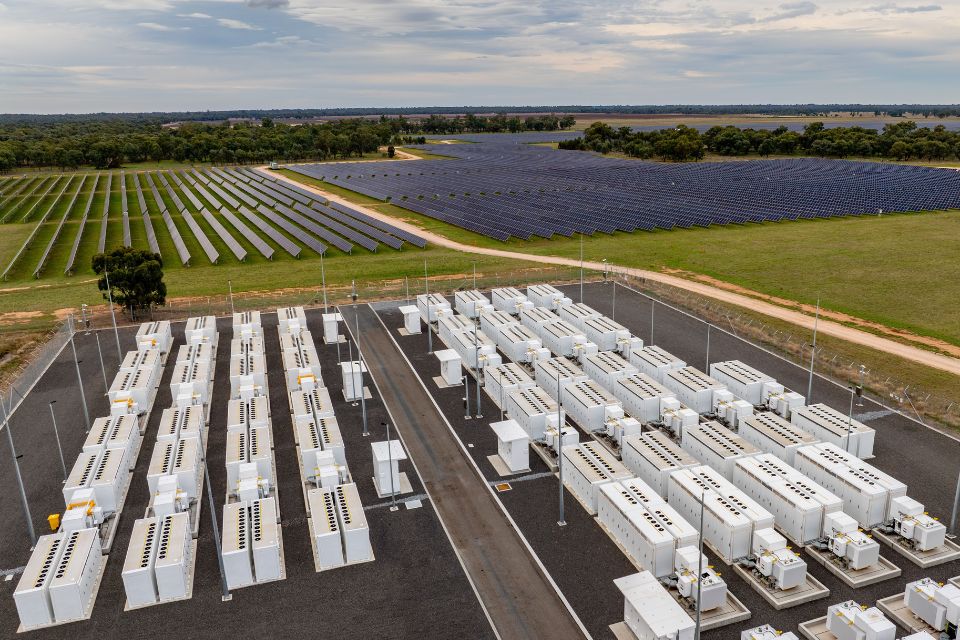
The Australian Government continues to prioritise investment in renewables projects.
AI and digital infrastructure
Australia’s long-term prosperity and security depend on building advanced industrial and technological capability. The National AI Plan sets out how Australia plans to capture the economic benefits from AI, share the benefits across the community and manage risk. The 2026–27 Budget supports the development of Australia’s AI proficiency through ‘AI Accelerator’ grants to boost research and industry capability.
In March 2026, the Australian Government released its Expectations of data centres and AI infrastructure developers to make it easier to invest in Australia for projects that provide strong benefits to the Australian community. By setting clear, nationally consistent signals, they support smoother engagement with communities, stronger coordination with states and territories, and faster progress for projects that are aligned with Australia’s priorities.
The Australian Government has signed MoUs with Microsoft and Anthropic to collaborate on AI safety and research in line with the Expectations. Both companies have committed to collaborating with Australia’s AI Safety Institute and to work towards capturing the full benefits of AI for Australians.
Fostering innovation and technology transfer
The 2026–27 Budget introduces incentives for foreign companies engaging in research and development activities in Australia. These include grants, tax credits, and access to government-funded innovation hubs, designed to encourage collaboration between local and international businesses.
Enabling faster environmental approvals
The Australian Government intends to modernise environmental information, data and digital systems (including through the use of AI). This will help improve user experience and enable simpler, faster environmental approvals.
The Government will also progress bilateral agreements with states and territories, to enable states to conduct assessments and approvals on the Commonwealth’s behalf. This move will reduce duplication and ensure more efficient processing of environmental approvals.
For more information on Budget measures, visit the Budget 2026–27 website.
How Austrade can help
The Australian Trade and Investment Commission (Austrade) supports foreign investors to establish and expand operations in Australia. Our experts in Australia and around the world can help you through every stage of your investment journey.
We offer the latest industry insights, connections with key stakeholders and decision-makers, and virtual or physical site visits to Australia. Thousands of foreign businesses have worked with us to tap into the Australian market.
For information on investment opportunities in Australia, contact an Austrade investment specialist.
Go further, faster with Austrade
Subscribe to the Investment Update newsletter to find out about new investment opportunities, insights and investor success stories across Australia.