The European Union (EU) is Australia’s second largest source of foreign investment, with A$132.1 billion of foreign direct investment (FDI) into Australia from the EU in 2024. Australian FDI into the EU the same year was worth A$79.5 billion.
When the Australia-European Union Free Trade Agreement (A-EU FTA) comes into force, it will provide greater predictability for EU investors seeking to invest in Australia including in sectors such as renewable energy, critical minerals, mining and manufacturing. A key benefit of the A-EU FTA is that Australia will raise its foreign investment screening thresholds for private EU investors in line with thresholds for other FTA partners, making it easier for private EU investors to invest.
‘Europe is a global power that shares our values and is already a significant source of foreign direct investment into Australia,’ says Jennifer Mackinlay, Austrade’s General Manager for Europe.
‘This agreement provides clearer rules, and improved access for those investors that will strengthen Australia’s position as a reliable destination for long-term investment.’
Renewable energy
In 2025, Australia ranked first in S&P Global’s list of most attractive power markets for renewable investment. Our renewable energy sector is already an area of interest for European investors, offering vast renewable energy potential, particularly from high-quality solar and wind resources, and strong support from federal and state governments.
European companies have been active in the Australian renewable energy market for many years. With Austrade support, French renewable energy giant Neoen has been accelerating Australia’s energy transition for over a decade, expanding its portfolio of big batteries across Western Australia and South Australia.
In South Australia, Neoen partnered with two other leading European renewable energy companies, NHOA and Elecnor, to deliver the Blyth Battery project, the state’s largest battery installation. As well as supporting the local grid during peak times, making renewable energy more reliable, the battery supplies 70 MW baseload for BHP’s Olympic Dam operations, which in addition to being Australia’s largest copper producer exports uranium for nuclear power generation to Europe.
Potentia Energy, a joint venture by Italy’s Enel Green Power and Japan’s INPEX, has 9 solar farm projects across Australia with a focus on social license drawn from Enel’s global operations.
Investment from European companies with extensive experience in energy grid infrastructure projects is crucial for Australia’s net zero transition. Under the A-EU FTA, investment into low-carbon goods, services, and technology will be easier.
For the first time in a free trade agreement, the A-EU FTA includes a binding commitment to implement obligations under the Paris Agreement on climate change. This codification will support ongoing investment to meet emissions targets.
Critical minerals and mining
Australia holds significant deposits of minerals that are critical to the global transition to clean energy, including lithium, rare earth elements and other battery inputs.
Securing reliable supply chains for these materials is a shared priority for Australia and the European Union. The A-EU FTA will enhance cooperation on critical raw materials, including through the possibility of jointly financing projects.
Australian critical minerals projects are already receiving European funding. In March 2026, InfraVia, a French infrastructure and private equity investor, committed US$50 million to Core Lithium’s Finnis Project in the Northern Territory. The investment is part of a broader US$205 million funding package provided by Glencore, Nokia and other institutional investors, supporting the acceleration of production to meet growing demand for battery-grade lithium.
Also in March 2026, the German government-owned development bank, Kreditanstalt für Wiederaufbau (KfW), invested A$84 million into Arafura’s Nolans Rare earths project in the Northern Territory. Made on behalf of the German Raw Materials Fund, the investment reflects the project’s strategic importance to Germany and Europe’s secure supply of critical minerals.
The project will deliver a fully integrated rare earths operation, producing neodymium and praseodymium (NdPr) — key materials used in high-performance permanent magnets. This strategic role is reinforced by Arafura’s long-term offtake agreement with Siemens Gamesa Renewable Energy to provide NdPr for production of permanent magnets in offshore wind turbines.
Once fully implemented, all tariffs on Australian mineral exports to the EU will be eliminated, supporting similar long‑term offtake arrangements, and allowing for stronger two-way investment.
European companies are also investing in infrastructure linked to the mining sector. Danish renewable energy company European Energy signed an agreement in 2024 to supply Rio Tinto with electricity from its Upper Calliope Solar Farm in Queensland for 25 years. Long-term, clean energy supply for mining projects provides the certainty and resilience needed to support stable, sustainable production of critical minerals for both markets.
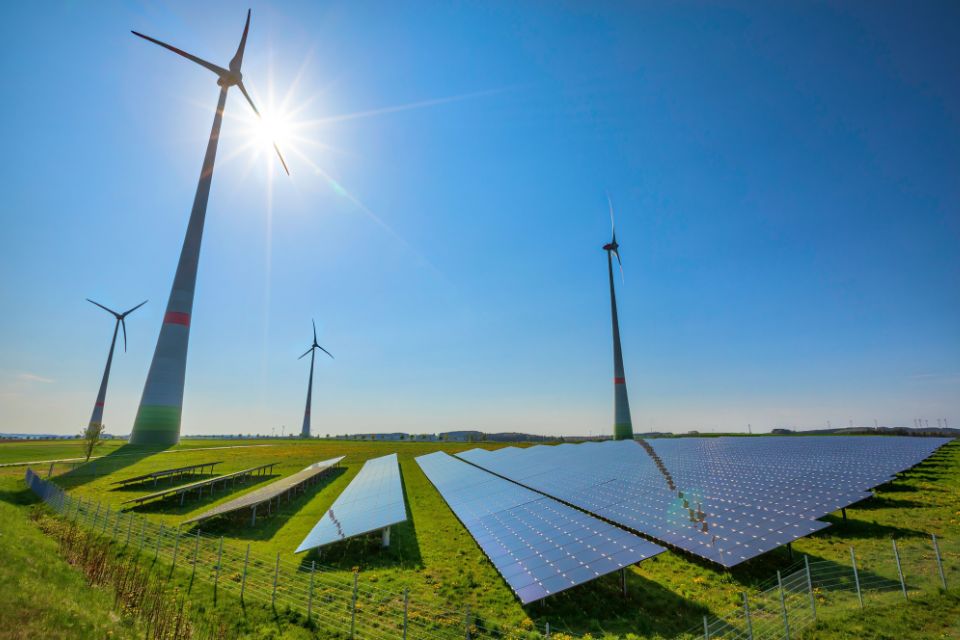
The A-EU FTA agreement will make investment in Australia’s renewable energy sector easier for European investors.
Enabling investment through skills and research
There is a long tradition of European investment in Australia, and the A-EU FTA will provide a stable platform for further growth.
The agreement features practical measures, including the Innovation Mobility Pathway, which will facilitate research and development collaboration between Australia and the EU.
This pathway will improve access to international expertise and collaborative research approaches. Under the pathway, eligible EU researchers can undertake research placements and internships in Australia for up to three years. It will also help Australian researchers, engineers and technicians travel, stay and move within the EU.
The agreement also contains advanced provisions on the movement of professionals for business purposes. Managers or specialists posted by European companies to their subsidiaries in Australia, or European professionals supplying some services in Australia will be able to stay for a period of up to six months, or up to four years for specific types of work placements.
These practical measures support collaboration in shared priority areas such as clean energy and critical minerals, supporting investment outcomes through deeper technical cooperation and shared expertise.
A pathway for cooperation
The Australia–European Union Free Trade Agreement is strengthening the foundation for joint investment. With shared goals in clean energy and critical minerals, there are clear opportunities for collaboration.
By improving regulatory certainty, lowering barriers and supporting skills and research mobility, the agreement creates clearer pathways for European companies to invest alongside Australian partners.
‘European companies are looking for stability, certainty and transparency as they invest to secure the energy and mineral supplies they need for future industries,’ says Dr Frances van Ruth, Head of Investment – Europe, Middle East and Africa & Net Zero Investment Lead.
‘Australia shares Europe’s climate ambitions and offers reliability of supply. The Australia–EU FTA helps bring these strengths together and supports long‑term investment partnerships.’
With a AAA rating from all 3 major rating agencies, Australia is a stable, long-term partner for European investment.
How Austrade can help
The Australian Trade and Investment Commission (Austrade) supports foreign investors to establish and expand operations in Australia. Our experts in Australia and around the world can help you through every stage of your investment journey.
We offer the latest industry insights, connections with key stakeholders and decision-makers, and virtual or physical site visits to Australia. Thousands of foreign businesses have worked with us to tap into the Australian market.
For information on investment opportunities in Australia, contact an Austrade investment specialist.
Go further, faster with Austrade
Subscribe to the Investment Update newsletter to find out about new investment opportunities, insights and investor success stories across Australia.